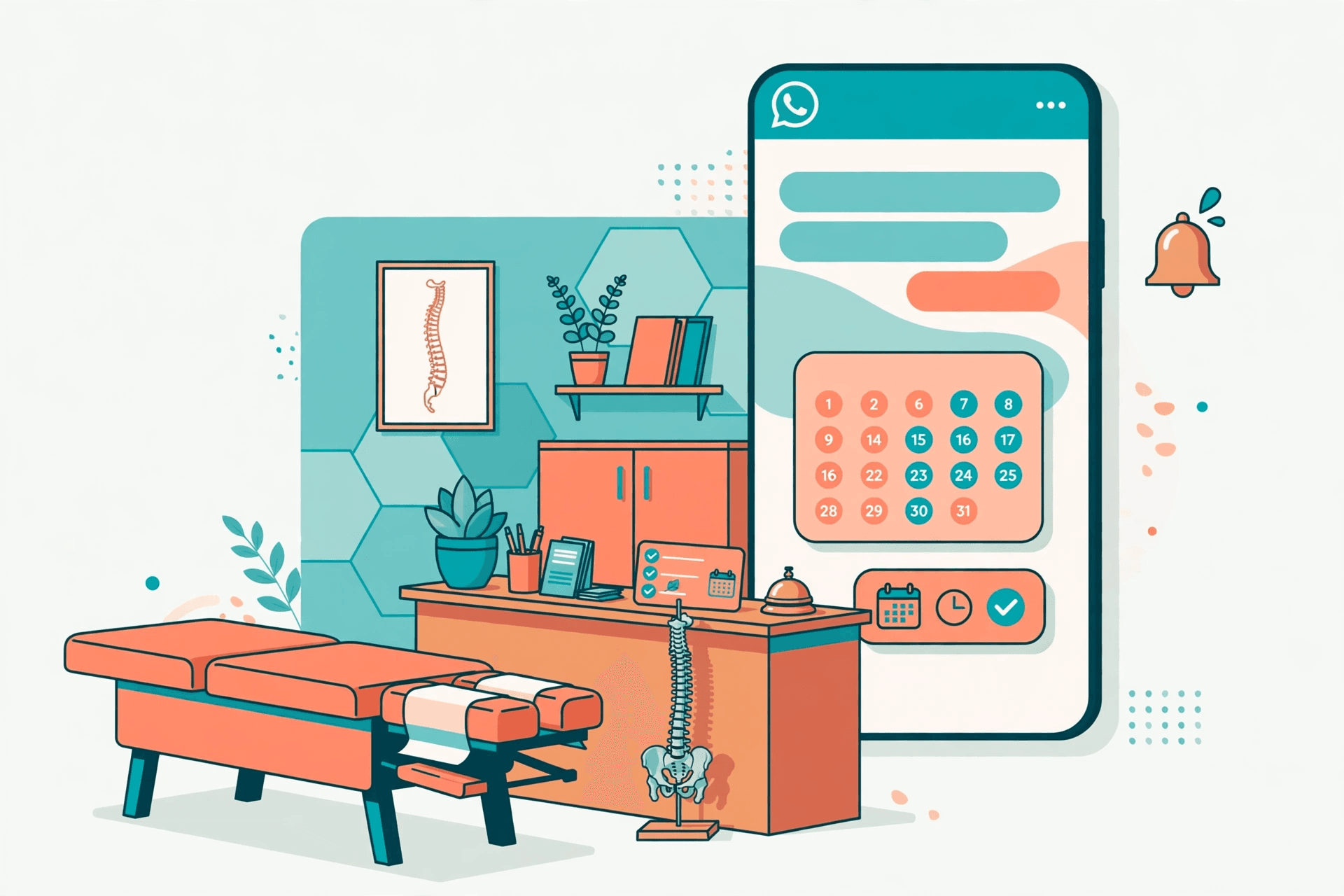
WhatsApp for chiropractors works on the rhythm a chiropractic clinic actually runs on: a patient books an adjustment, comes back on the care plan the chiropractor set, and — too often — quietly stops coming before the plan is finished. The messages that fill a chiropractor's day are the same ones every clinic hears: “Can I book an adjustment this week?”, “When is my next visit?”, “My report is ready — when do I come in?”, “My back is sore after yesterday.” The chatbot answers the booking and the follow-up questions from the clinic's own documents, keeps the patient on the care-plan cadence between visits, and brings lapsed patients back one conversation at a time — while anything clinical goes straight to the chiropractor. This article covers adjustment bookings and new-patient intake, the care-plan cadence, reactivation of lapsed patients, post-adjustment aftercare and report follow-ups, and the boundary the agent must never cross.
Adjustment bookings in chat — and the first visit is different
A regular adjustment and a first visit are not the same booking, and the chatbot has to know the difference. A returning patient wants the next slot with their chiropractor — a short visit, a known length, a diary the agent can offer directly. A new patient needs more: the intake form, the health history, and a longer first appointment that leaves room for the consultation and the examination. The agent collects the facts the clinic needs before offering a slot — new or returning patient, which chiropractor, what the visit is for, and the preferred day — then offers real slots from the diary, matched to the visit type. If the patient wants a slot that is not available, the agent offers the nearest alternatives and books there, or passes the request to the front desk with everything already filled in.
The intake step is where a chiropractic agent earns its keep. Instead of a form emailed after the booking — or a clipboard in the waiting room — the agent sends the intake link in the same thread, asks whether the patient has had X-rays or imaging elsewhere, and notes anything the chiropractor should see before the visit, such as a recent injury or a referral from another clinician. It never asks the patient to describe their symptoms in detail in chat, and it never tries to judge whether chiropractic care is appropriate for them: that judgement belongs to the chiropractor at the first visit. The booking rules — first-visit length, adjustment length, re-examination length, which chiropractor works which days, how far ahead patients can book — are written down before launch, and the agent follows them. The general booking pattern is covered in the
AI booking agent guide, and the physiotherapy clinics guide covers the same booking problem from the treatment-course side: WhatsApp AI agent for physiotherapy clinics.
The care plan: a cadence, not a reminder
What makes chiropractic different from a one-off appointment is the care plan. The chiropractor sets a visit cadence — often more frequent at the start, tapering as the patient improves — and the plan only works if the patient keeps coming. The agent's job is to hold that cadence in chat: it books the next visit before the patient leaves the thread, confirms the day before, and follows up between visits with a one-to-one check-in about how the patient is feeling since the last adjustment. That check-in is a question, not a claim — “How is your back feeling since Tuesday's adjustment?” — and the patient's reply is logged in the shared inbox so the chiropractor sees it before the next visit. The agent never changes the plan, never suggests a different frequency, and never tells a patient they can skip a visit: the cadence is the chiropractor's, and the agent's job is to keep the patient on it.
When a patient misses a visit in the middle of a care plan, the follow-up matters more than it does for a single appointment, because a missed adjustment can quietly end the whole plan. The agent sends a short, kind one-to-one message in the same thread — offering the next slot, not scolding — and books the patient back in. The no-show follow-up pattern is covered in the
Illustrative example: a new patient and a care-plan check-in
The following exchange is illustrative — an example of the shape of a conversation, not a real patient chat. Patient: “I'd like to book my first adjustment. I have lower back pain and I was referred by my GP.” Agent: “Welcome — a first visit is 45 minutes and includes the consultation and examination. I can offer Thursday 10:00 or Friday 2:30 with Dr. Ahmed. Which suits you?” Patient: “Thursday 10:00.” Agent: “Booked. Here's your intake form — it takes about five minutes, and please bring any X-rays you already have. The clinic will confirm by message the day before.” Two weeks later, after the third visit, the same thread carries the check-in: Agent: “How is your back feeling since Tuesday's adjustment?” Patient: “Much better — the stiffness in the morning is gone.” Agent: “Good to hear — I've noted that for Dr. Ahmed, and your next visit is Monday 11:00 as planned.” The figures and names in this example are illustrative; replace them with your own clinic's visit lengths and practitioners before deciding anything.
Reactivation: the patients who stopped coming
Every chiropractic clinic has a quiet list: patients who finished a plan and never booked a maintenance visit, patients who stopped halfway through, patients who came once and never returned. Reactivation is reaching out to those patients one at a time, in the thread where they last booked, with a message that belongs to them — a check-in on the care plan they were on, or an invitation to book a re-examination after a gap. The agent only messages patients the clinic has an existing relationship with and who have agreed to be contacted, and it offers a next step — a re-examination slot, a review of the plan — rather than a generic offer. Nothing here is a blast to the whole patient list, and nothing is sent to someone who asked not to be contacted. That distinction is what keeps the account in good standing with WhatsApp's rules, and it is covered in the
WhatsApp broadcast rules guide. The patients who come back through reactivation re-enter the same booking and care-plan flow as a returning patient — a longer re-examination slot first, then the cadence the chiropractor sets.
Aftercare, X-ray reports, and the clinical boundary
After an adjustment, patients ask the same handful of questions: is some soreness normal, what should I do tonight, when can I exercise again, should I use heat or ice? The agent answers from the clinic's own aftercare sheet, in the clinic's own words, at whatever hour the patient asks. The same goes for reports: when X-rays or a report are ready, the agent tells the patient the report is ready and books the review visit where the chiropractor explains it — it never summarises the findings or the images itself. That is the easy half of the boundary. The hard half is the message that looks like an aftercare question and is not: new pain after an adjustment, numbness or tingling, pain that is getting worse instead of better, a fall or an injury since the last visit. Those messages go straight to the chiropractor immediately, with the full thread attached, and the agent says so plainly in the same reply. It never diagnoses, never reassures a patient about a new symptom, and never advises whether to come in — it hands over and lets the clinician decide. The handoff list for those categories is written before launch, with a named person for each one. The setup is covered in the
What to teach the agent before launch
A chiropractic agent is only as good as the documents it is given, and a clinic usually has better documents than it thinks. The visit-type list — first visit, adjustment, re-examination — with each one's length and price, in the clinic's own words. The intake form and the booking policy: deposit rules, cancellation and no-show terms. The care-plan wording: how the clinic explains the cadence to patients, and the check-in questions it wants asked between visits. The aftercare sheet: soreness, heat and ice, exercise, and what to do tonight. The reactivation rules: who may be contacted, after how long, and with what offer. The handoff list: new pain, numbness, tingling, worsening symptoms, or any clinical question goes to the chiropractor immediately. Upload those, and the agent answers from them — which is also what keeps it honest. An agent that invents a visit length, a care-plan frequency, or an aftercare answer is worse than no agent at all, and the fix is not a smarter model; it is better documents. Start with the five questions patients actually ask, check the answers against the published visit list, and add a question only when the document that answers it exists.
What WhatsApp for chiropractors costs on Neksio
On Neksio, the plans follow the same shape as for any small clinic: Free covers 100 AI replies a month on WhatsApp, Starter at $12.99 a month covers 5,000 replies, Growth at $16.99 a month covers 15,000 replies and adds Facebook and Instagram, and Scale at $29.99 a month is unlimited replies with your own key, plus done-for-you onboarding. A single-practitioner clinic usually starts on Free — 100 replies a month covers the booking questions and the care-plan check-ins while the clinic checks whether the answers are right — and moves to Starter when the volume grows past that, or to Growth if the clinic also answers patients on Facebook and Instagram. The templates for reminders and reactivation follow WhatsApp's own rules, explained in the
message templates guide. Full detail is on the pricing page.
What WhatsApp for chiropractors looks like on Neksio
On Neksio, one AI agent answers on WhatsApp from the clinic's own documents — visit list, intake form, booking policy, care-plan wording, aftercare sheet — and hands over to a human with the full conversation attached, in one unified inbox. It answers one conversation at a time: Neksio is not a bulk or broadcast tool. Free covers 100 AI replies a month on WhatsApp; Starter at $12.99 a month covers 5,000 replies; Growth at $16.99 a month covers 15,000 replies and adds Facebook and Instagram; Scale at $29.99 a month is unlimited replies with your own key, plus done-for-you onboarding.
100 AI replies a month on WhatsApp, no credit card. Connect WhatsApp, upload your visit list and aftercare sheet, and let the agent answer from your own words. Full detail on the pricing page.
Frequently asked questions
- Can patients book a chiropractic adjustment on WhatsApp?
- Yes — the agent collects whether the patient is new or returning, which chiropractor, and the preferred day, then offers real slots from the clinic's diary, matched to the visit type. A first visit is longer than a regular adjustment, so the slot offered matches the visit.
- What does the new-patient intake look like in chat?
- The agent sends the intake form in the same thread, asks whether the patient has had X-rays or imaging elsewhere, and notes anything the chiropractor should see before the visit, such as a recent injury or a referral. It never asks the patient to describe symptoms in detail in chat, and it never judges whether chiropractic care is appropriate — that is the chiropractor's call at the first visit.
- How do care-plan follow-ups work between visits?
- As one-to-one check-ins in the patient's own thread — asking how they are feeling since the last adjustment — on the cadence the chiropractor set. The patient's reply is logged in the shared inbox for the chiropractor to see before the next visit. The agent never changes the plan or suggests a different visit frequency.
- Can the agent bring back patients who stopped coming?
- Yes — with one-to-one messages in the thread where they last booked, offering a re-examination or a review of their care plan. It only contacts patients the clinic has an existing relationship with who agreed to be contacted, and nothing is sent as a blast to the patient list.
- What happens when a patient reports soreness or new pain after an adjustment?
- Routine aftercare questions are answered from the clinic's own aftercare sheet. But new pain, numbness, tingling, or symptoms getting worse go straight to the chiropractor immediately, with the full thread attached — the agent never diagnoses or reassures a patient about a new symptom. X-ray reports are never summarised by the agent; it books the review visit where the chiropractor explains them.
- What does WhatsApp for chiropractors cost on Neksio?
- Free covers 100 AI replies a month on WhatsApp; Starter $12.99 for 5,000 replies; Growth $16.99 for 15,000 replies including Facebook and Instagram; Scale $29.99 unlimited with your own key plus done-for-you onboarding. Most single-practitioner clinics start on Free and move up when the volume grows past 100 replies a month.